The UDL Blueprint: Furniture That Teaches and Transforms

In our first dive into Universal Design for Learning (UDL), we established the foundational truth: learner variability is the norm. UDL is the framework that compels us to stop trying to “fix” the student and start intentionally designing the learning environment to remove barriers.
While curriculum and instructional strategies are vital, the most immediate, tangible barrier a student faces is the physical classroom itself. When a space is designed for the mythical "average" learner, it is a fortress of barriers for everyone else.
The good news? The furniture you choose is the single most powerful tool you have to transform a static space into a dynamic, UDL-aligned environment. It's not just about comfort; it’s about intentionality. Every chair, every desk, and every storage unit must be a conscious choice that supports the three core UDL principles: Representation, Engagement, and Action & Expression.
Here is how intentional furniture design becomes the ultimate barrier-buster in the UDL-infused classroom.
Representation: Designing for Clarity and Access
The principle of representation asks us to offer information in multiple ways. This doesn't just mean digital options; it means physical supports for every learning modality.
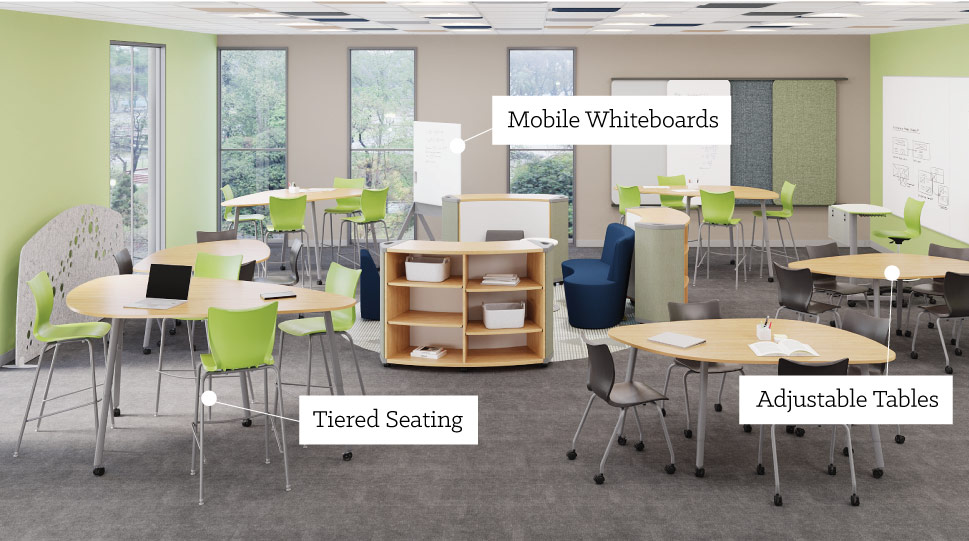
- Mobile Whiteboards: These bust the barrier of fixed focus points and limited collaboration space. They allow the teacher or student to represent information visually on a whim. The boards can instantly create small learning groups for peer-to-peer instruction, or shield students who need to focus on core concepts without visual distraction.
- Adjustable Height Tables & Desks: These eliminate the barrier of fixed posture leading to physical discomfort that can distract from learning. By allowing students to adjust their work surface to sit or stand, they spend less mental energy trying to stay comfortable. No matter a student's size or height, they can position their desk in a way that supports their posture and focus, making them better prepared to process, interpret, and understand information.
- Tiered Seating: This removes the barrier of poor visibility for students who may struggle with attention or processing. Clear, unobstructed sightlines help students stay focused on the teacher during instruction. When students can easily see the teacher, and the teacher can easily see the students, students are more likely to stay on task, remain attentive, and fully engage with new information.
Engagement: Fostering Kinesthetic Learning and Choice
Engagement is about tapping into learners’ interests and motivating them. The traditional chair and desk system actively suppresses a critical human need: movement. Kinesthetic learning is a hands-on learning style in which students best understand and remember information through movement, touch, and physical activity. Flexible, kinesthetic furniture offers options for self-regulation that honor the variability of students’ nervous systems.
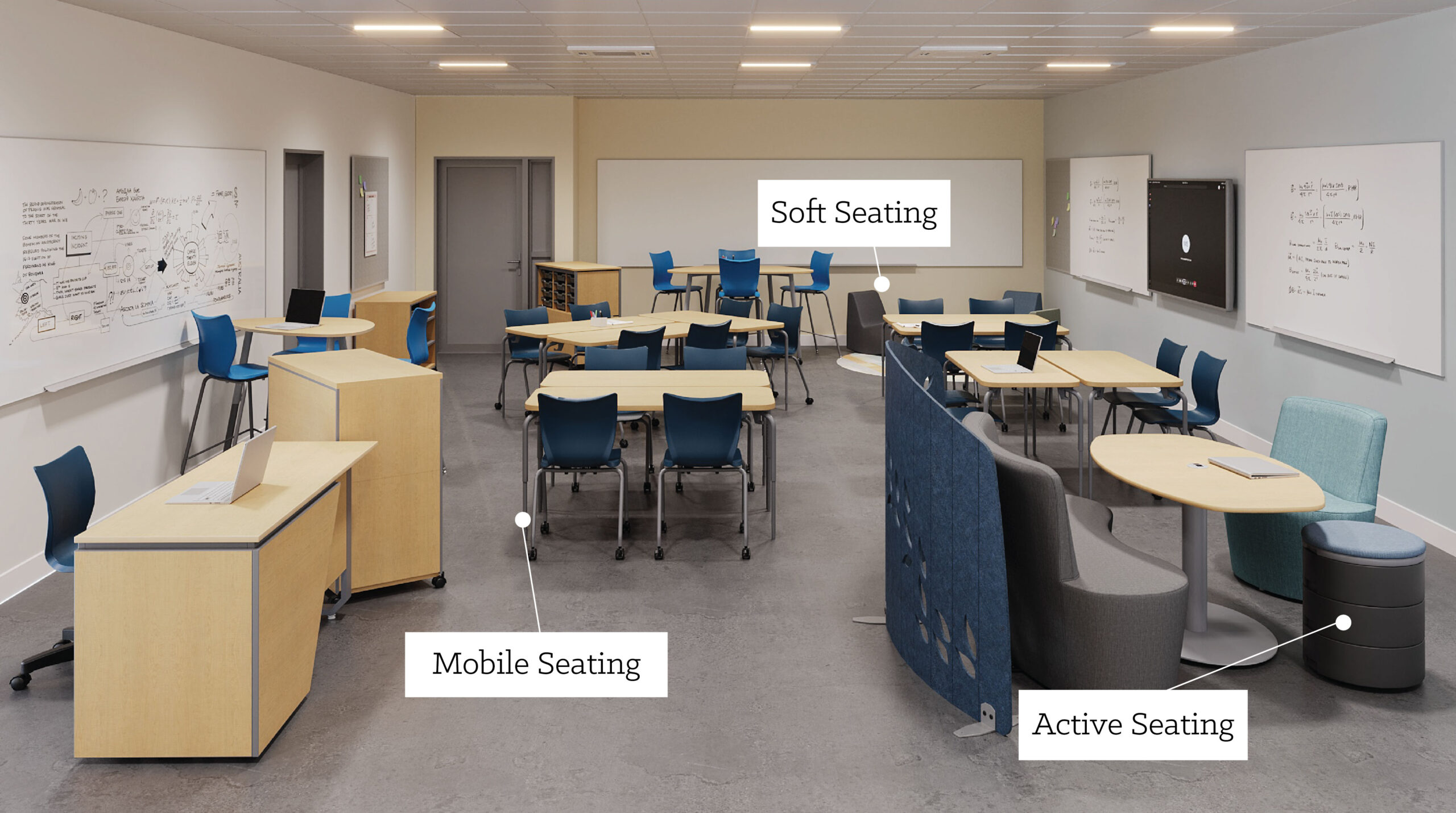
- Active Seating: This busts the barrier of having to sit perfectly still, which drains focus and energy for kinesthetic learners. It allows students to gently rock, tilt, or swivel while working. This continuous, low-level movement, often essential for regulating attention, becomes a built-in feature, supporting sustained effort and persistence without disrupting the class.
- Soft Seating: This removes the barrier of institutional discomfort that diminishes emotional safety and increases focus. Creating comfortable "decompression zones" or reading nooks allows students to select environments that best meet their internal need for comfort and security, thereby increasing individual choice and autonomy.
- Mobile Seating: This eliminates the barrier of a static classroom layout that reinforces the "one-size-fits-all" mentality. Lightweight chairs and desks empower students to quickly and quietly reconfigure their space for individual, pair, or small-group work. This choice fosters a sense of self-discovery and agency over their learning environment.

Action & Expression: Facilitating Production and Collaboration
Action & Expression requires us to offer multiple ways for students to navigate materials and demonstrate what they have learned. For this principle, furniture must be a powerful facilitator of both individual focus and group production.
- Reconfigurable Desks: These eliminate the barrier of slow transitions, which wastes instructional time and limits collaboration options. Mobile desks can be quickly arranged for individual work, pulled into pods of four for small group collaboration, or moved into a circle for whole group discussion. This flexibility supports multiple ways for communication, written, verbal, collaborative, and rapid shifts in group size.
- Screens: These bust the barrier of sensory overload from sights and sounds, a major hurdle for many students. Screens can be used as temporary dividers to create quiet zones for reflection and focused work. This is especially important for students who become overwhelmed in loud and visually stimulating classrooms, giving them a place to calm or retreat to work without distraction.
- Accessible Storage: This removes the barrier of hidden materials, which limits access to tools and resources. Open shelving, with clear labels or visual cues, allows students to easily find and retrieve different materials, from art supplies for a project to manipulatives for math. This simple design feature supports students in setting appropriate goals by having the necessary tools readily available.
The Expert Learner’s Toolkit
Ultimately, UDL is about developing expert learners who are purposeful, resourceful, and goal-directed. When every piece of furniture in a classroom offers a choice, a way to sit, a way to move, a way to collaborate, or a way to retreat, it transforms from mere utility into a pedagogical tool.
By making intentional choices in classroom furniture, you are not just decorating a room; you are laying the physical foundation for equity and empowerment, ensuring that every student has developed learner agency to bust the barriers and achieve their full potential.
Contact us to get started laying out your ideal UDL classroom today.

View our 2026 Catalog
Recent Posts
 Kintsugi Village: Transforming an Abandoned Campus into a Thriving Hub for Children, Creativity & Community in Detroit
 A Grant That Redesigned Learning: Geneseo Elementary
 Future-Ready Learning 2.0: Designing Spaces That Evolve as Fast as Students
 Beyond the Desk: How Intentional Design Transforms Career and Technical Education
 Reimagining the Library: Sierra High School’s Journey to a Flexible Learning Hub
 Smith System’s Newest Products for 2026: More Dynamic Furniture Designed to Help Schools Thrive
 The Furniture Formula: How Layout Affects Learning Outcomes
 The Power of Play: Building a Strong Foundation in Early Childhood