Designing for Early Childhood: How Environment Shapes the Way Young Children Learn
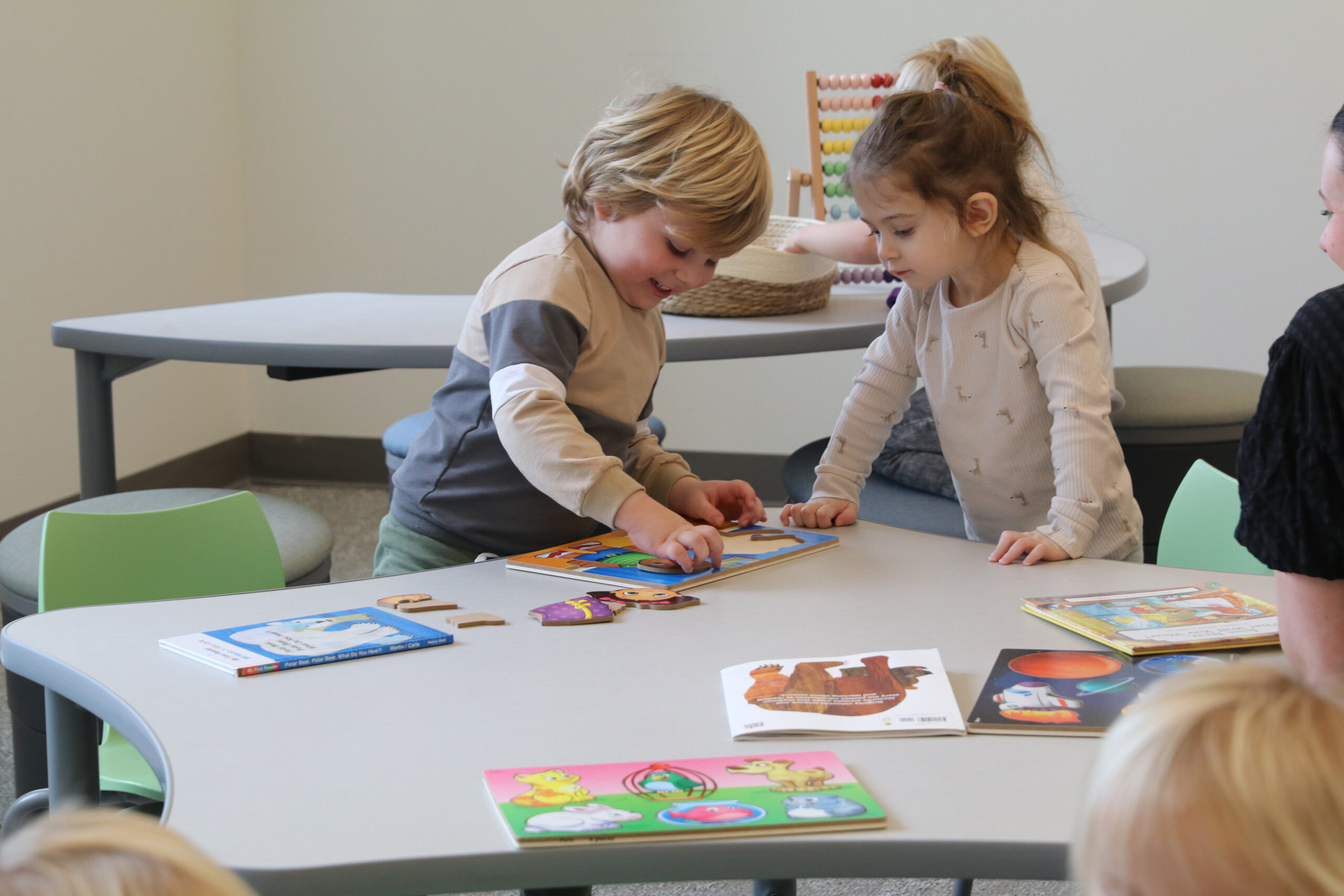
Early childhood classrooms are unlike any other learning environment in a school. For many children, preschool is their very first experience away from home and their first introduction to structured learning. Because of this, the classroom environment becomes much more than a room filled with furniture; it becomes a space that helps shape emotional development, social growth, curiosity, independence, and a lifelong relationship with learning.
Research consistently shows that the early years are among the most crucial in human development. By age five, a child’s brain is nearly 90% developed, with neural connections rapidly forming through experience, movement, exploration, and interaction. During this critical period, the spaces children learn in can directly impact cognitive development, emotional regulation, language acquisition, executive functioning skills, and social behaviors.
Maria Montessori once said, “The work of education is divided between the teacher and the environment.”
That idea sits at the heart of effective early childhood design. Young children do not learn best by sitting still for long periods of time. They learn through movement, discovery, sensory exploration, imagination, storytelling, collaboration, and hands-on experiences. The classroom itself must support those behaviors. That idea sits at the heart of effective early childhood design.
Why Early Childhood Learning Environments Matter
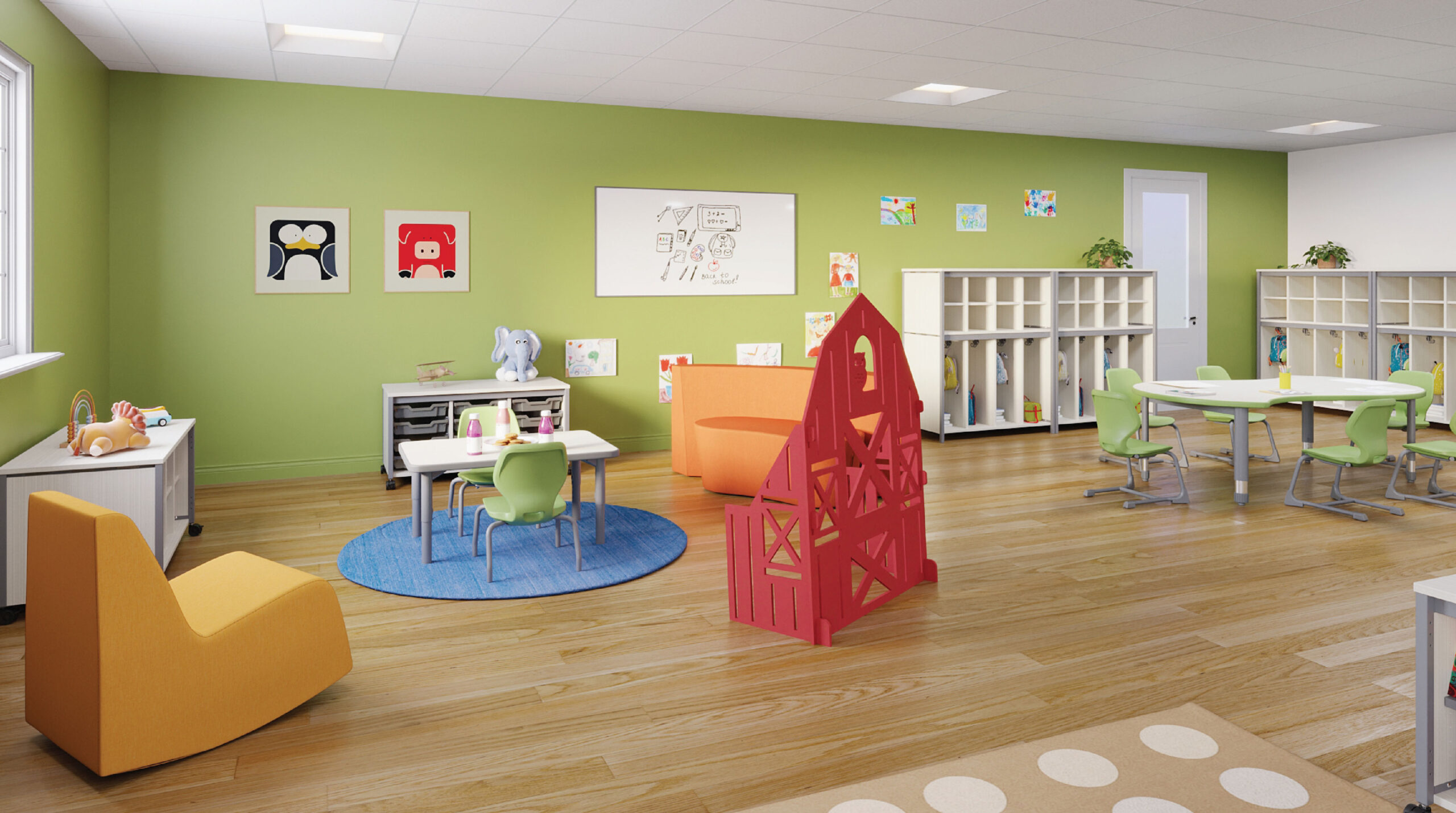
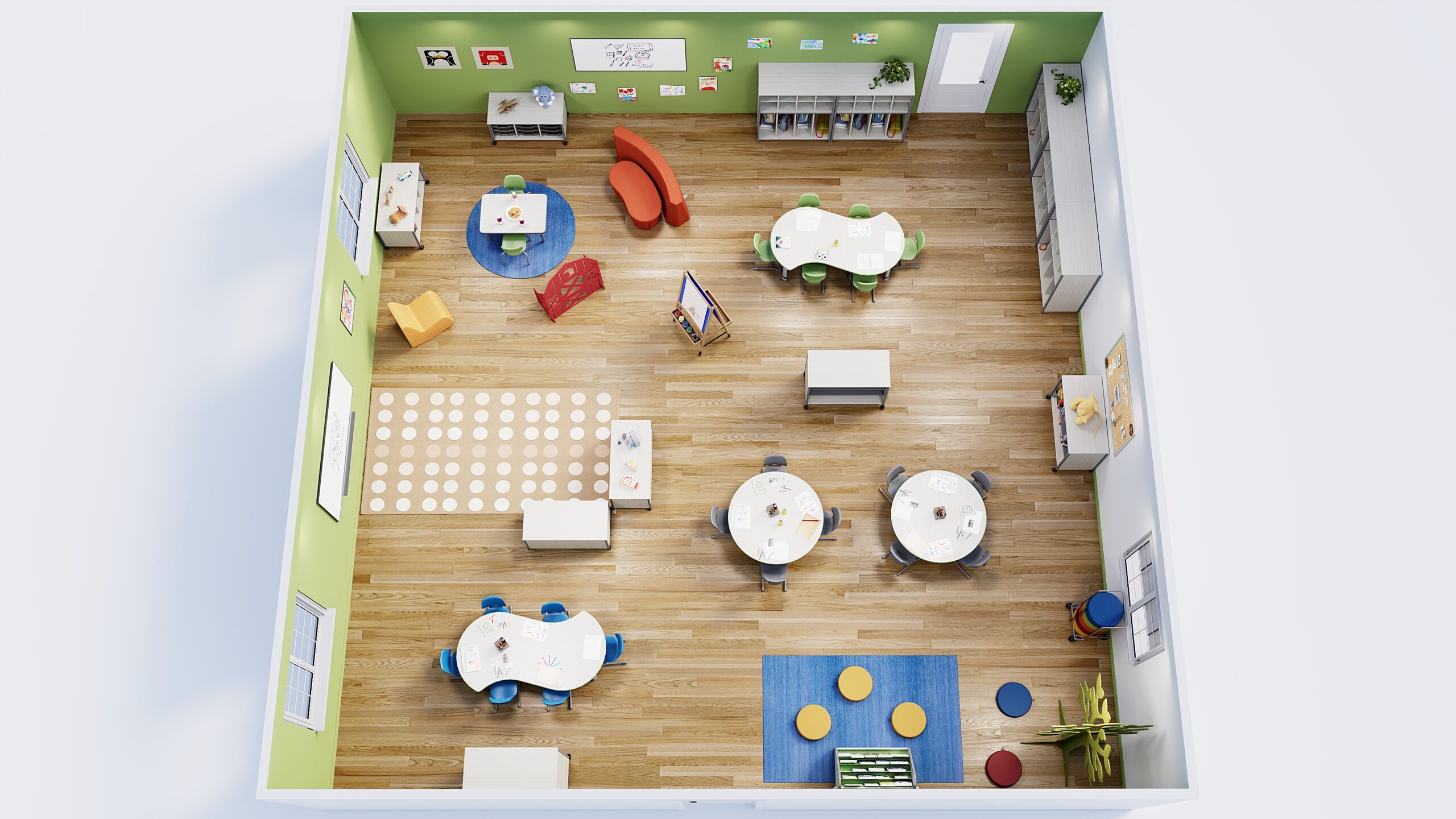
Unlike traditional elementary classrooms, early childhood environments are intentionally designed around learning centers. These centers, such as dramatic play, block play, reading, science discovery, math manipulatives, music, art, and sensory exploration, allow children to rotate through experiences that support different aspects of development. Flexible furnishings, such as Flowform® Play, help define these activity zones while giving educators the freedom to easily adapt spaces as children's interests, activities, and learning needs evolve throughout the day.
Each area serves a purpose. A dramatic play center builds social and emotional skills through role playing and communication. Block play develops problem-solving, spatial reasoning, and collaboration. Sensory centers help children connect tactile experiences to cognitive growth, while literacy and language areas support vocabulary development and early reading readiness.
Learning Centers Encourage Exploration and Discovery
Research in the learning sciences highlights how play-based learning influences growth, promotes discovery, and supports the formation of neural connections. Children naturally learn through exploration and experimentation. When classrooms are designed to encourage movement and curiosity, students become active participants in their own learning. They begin building the foundational skills they will carry with them throughout their educational journey.
Balancing Educational Design with Classroom Requirements
Just as important as educational philosophy is understanding the practical standards required to create a successful early childhood environment. Designers and schools must consider state licensing requirements, district standards, and classroom regulations when planning spaces. These often include child-to-teacher ratios, square footage requirements per child, classroom enrollment limits by age group, visibility and supervision guidelines, and furniture requirements for the room. Many states also require a percentage of seating to include chair backs, proper napping space, accessible storage, handwashing stations, and clear circulation paths for safety and supervision. Thoughtful classroom design must balance these compliance requirements while still creating spaces that feel welcoming, flexible, and inspiring for young learners.
Designing Classrooms That Support Independence
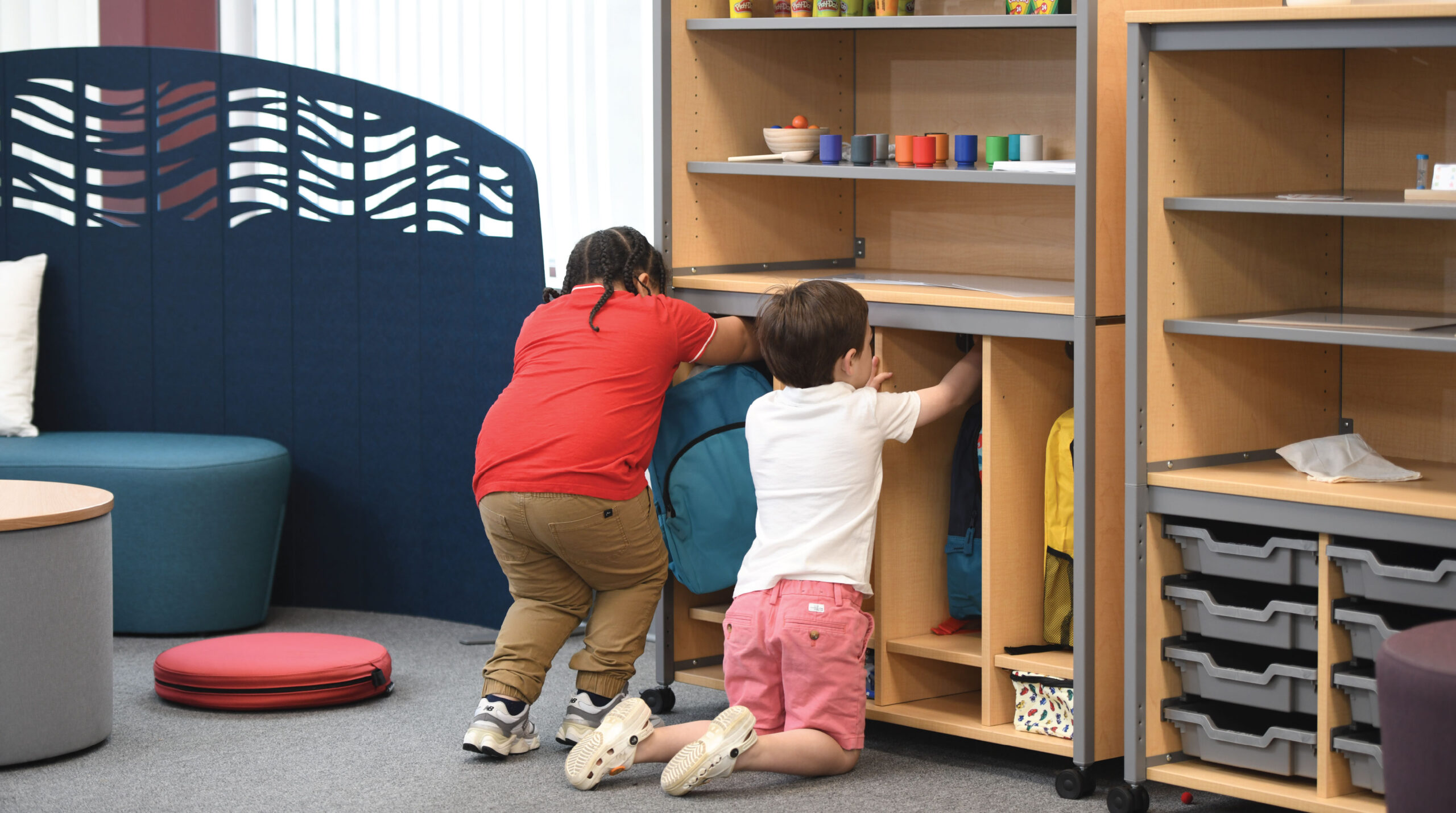
The physical environment itself also impacts behavior. Well-designed classrooms help create structure, independence, and emotional security. Furniture scaled appropriately for young learners allows children to sit comfortably with their feet on the floor and backs supported, promoting healthy posture and focus. Seating solutions like Flavors® chairs, available in early childhood sizes, are designed to provide age-appropriate comfort while supporting active learning throughout the day. Low storage units such as Constellate® Storage and clearly defined centers encourage autonomy by allowing children to independently access and return materials. Organized environments with clear sightlines also help reduce overstimulation and minimize challenging behaviors.
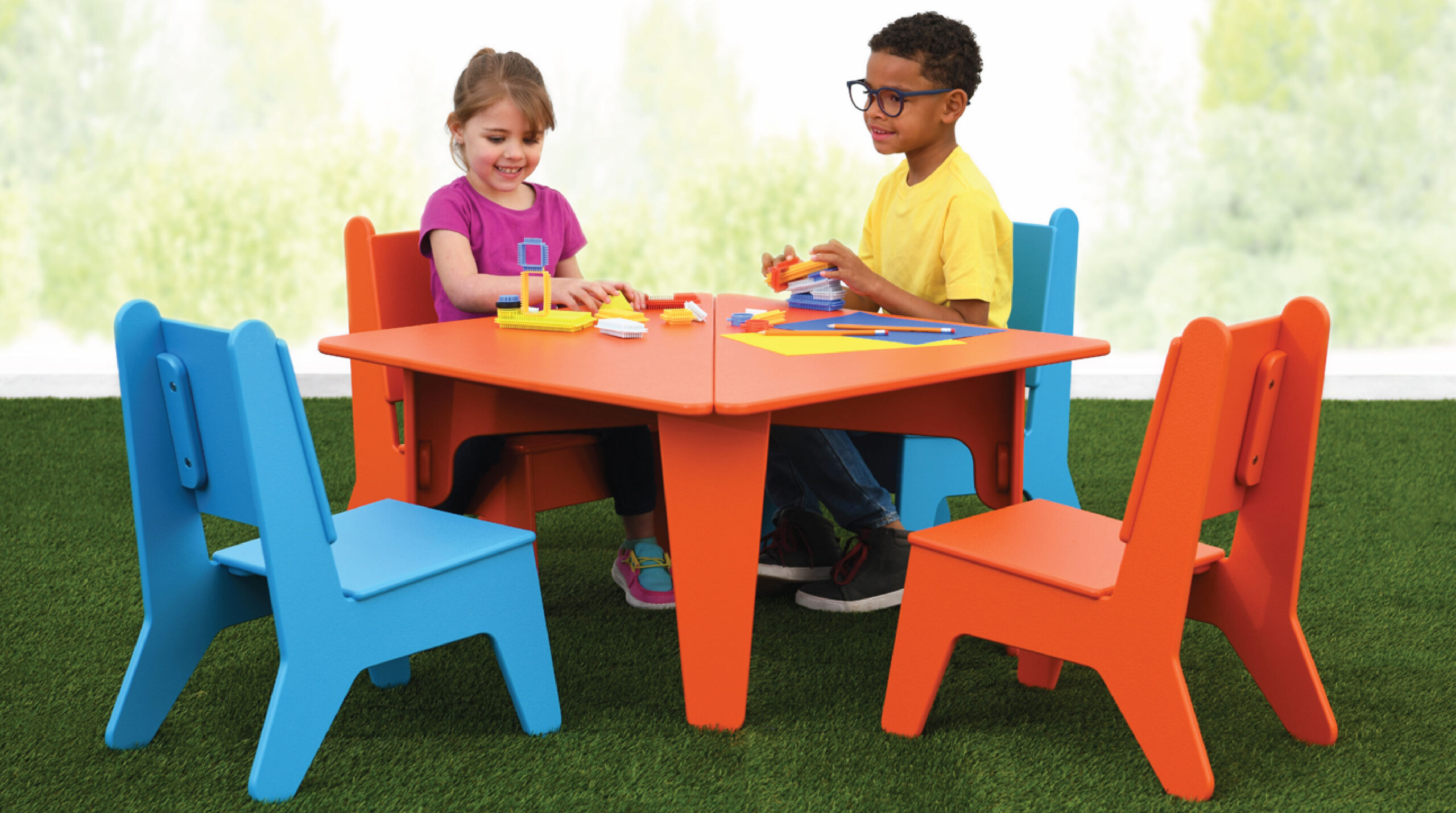
Choice is another essential element of successful early childhood environments. Young learners are naturally curious and intrinsically motivated to explore. When classrooms offer varied seating options, multiple activity types, and flexible spaces, children begin developing executive functioning skills such as decision-making, self-regulation, cognitive flexibility, and task initiation. Flexible soft seating and activity pieces from the Flowform® Play collection allow educators to quickly reconfigure spaces, giving children opportunities to choose how and where they learn while supporting movement, collaboration, and independent exploration. These are foundational life skills that extend far beyond preschool.
The Role of Sensory Experiences and Nature
Sensory-rich environments also play a critical role in cognitive and emotional development. Tactile experiences, varied textures, movement opportunities, music, lighting, and sensory play all help strengthen neural pathways and support how children process information. Research shows that sensory engagement can improve attention, emotional regulation, language development, and problem-solving abilities. In early childhood classrooms, learning is not just visual or auditory: it is fully physical and experiential.
Connection to nature is equally important. Access to natural light, calming colors, plants, wood textures, and views outdoors can positively affect mood, focus, creativity, and emotional well-being. Extending learning beyond the classroom with OpenSpaces® outdoor furniture creates comfortable, durable environments where children can engage with nature through hands-on exploration, collaborative activities, and outdoor discovery. Nature-inspired spaces help children feel calm and secure while encouraging wonder, imagination, and exploration.
Why Flexible Classrooms Support Young Learners
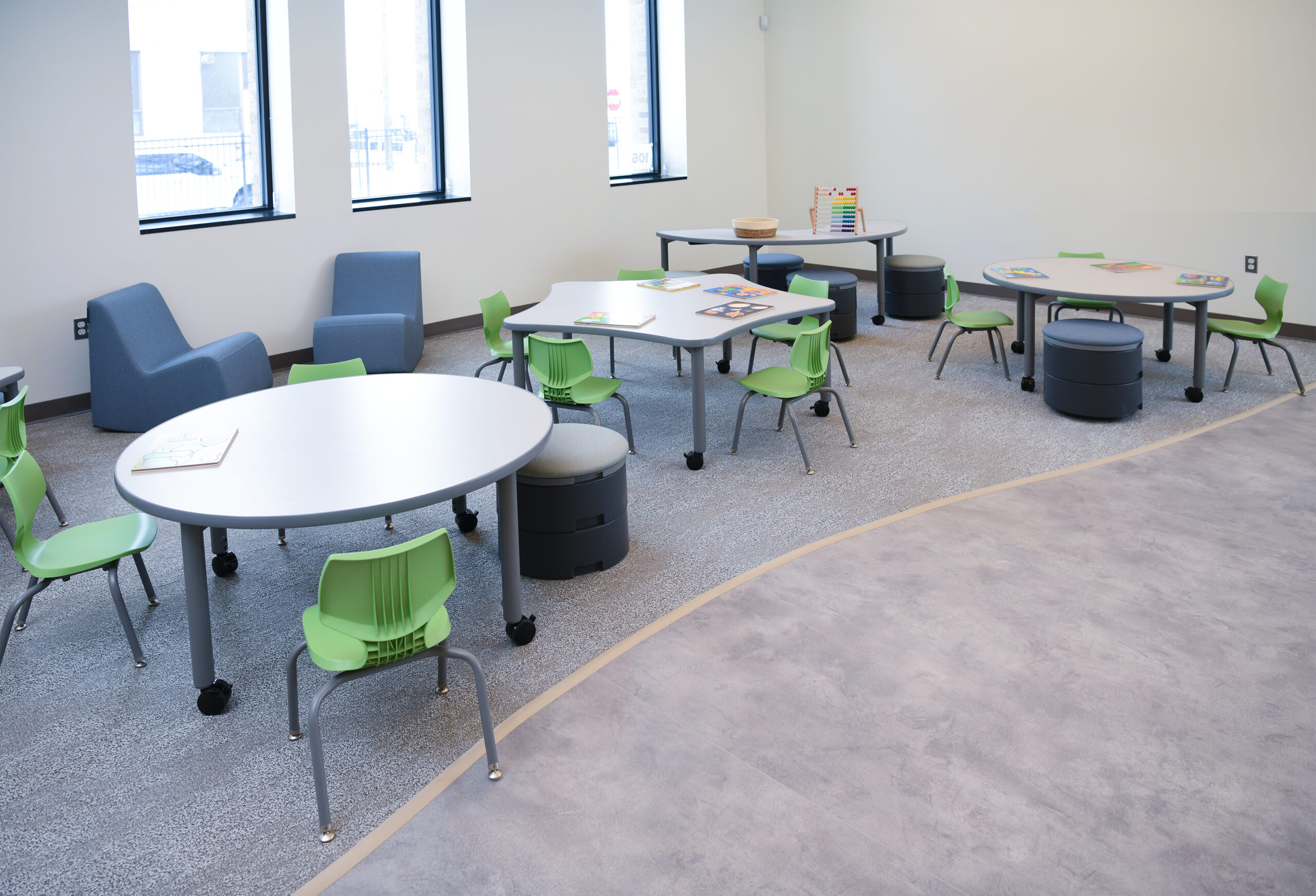
One of the most important principles in early childhood design is flexibility. Teachers constantly shift between group sizes, activities, routines, and learning modes throughout the day. Furniture and layouts that can easily adapt help create classrooms that remain functional, engaging, and supportive for both students and educators. Flexible environments allow spaces to transition from group instruction to free play, from mealtime to naptime, and from quiet reflection to active movement without disrupting learning.
Designing Spaces Where Every Child Can Thrive
Ultimately, early childhood environments should feel less like traditional classrooms and more like spaces designed for living, learning, and growing. They should support the whole child: emotionally, socially, cognitively, and physically. When thoughtfully designed, these environments become catalysts for curiosity, confidence, independence, and lifelong learning.
At Smith System, we believe the environment is not separate from learning; it is part of the learning experience itself. Because when young children feel safe, inspired, engaged, and empowered in their space, they begin building the foundation for everything that comes next.

Written by: Emily Islip, M.ED, ECLPS
View our 2026 Catalog
Recent Posts
 Design Without Limits: Creating Schools That Feel Like Home with Custom Materials
 Back-to-School Classroom Tips That Set Students Up for Success
 The Importance of School Furniture in Inclusive and Special Education Classrooms
 Designing CTE and Makerspaces for Learning Real-World Skills
 Designing Classrooms Around How Students Learn: The 4 Pillars
 Student-Centered Layouts & Storytelling
 Designing for Decades: The Future of Sustainable Learning Environments
 New Library Becomes Heart of Learning at Benjamin J. Martin Elementary